Brand Identity · Logo, Visual System & Guidelines
Brand Identity That Makes You Look Like the Business You Are Becoming
Buyers judge in seconds. A stitched-together logo, three different fonts across your materials and colours chosen by whichever designer was cheapest do not just look untidy — they quietly tax every sale, because customers read visual disorder as business disorder. Brand identity is the system that removes that tax everywhere your business appears.
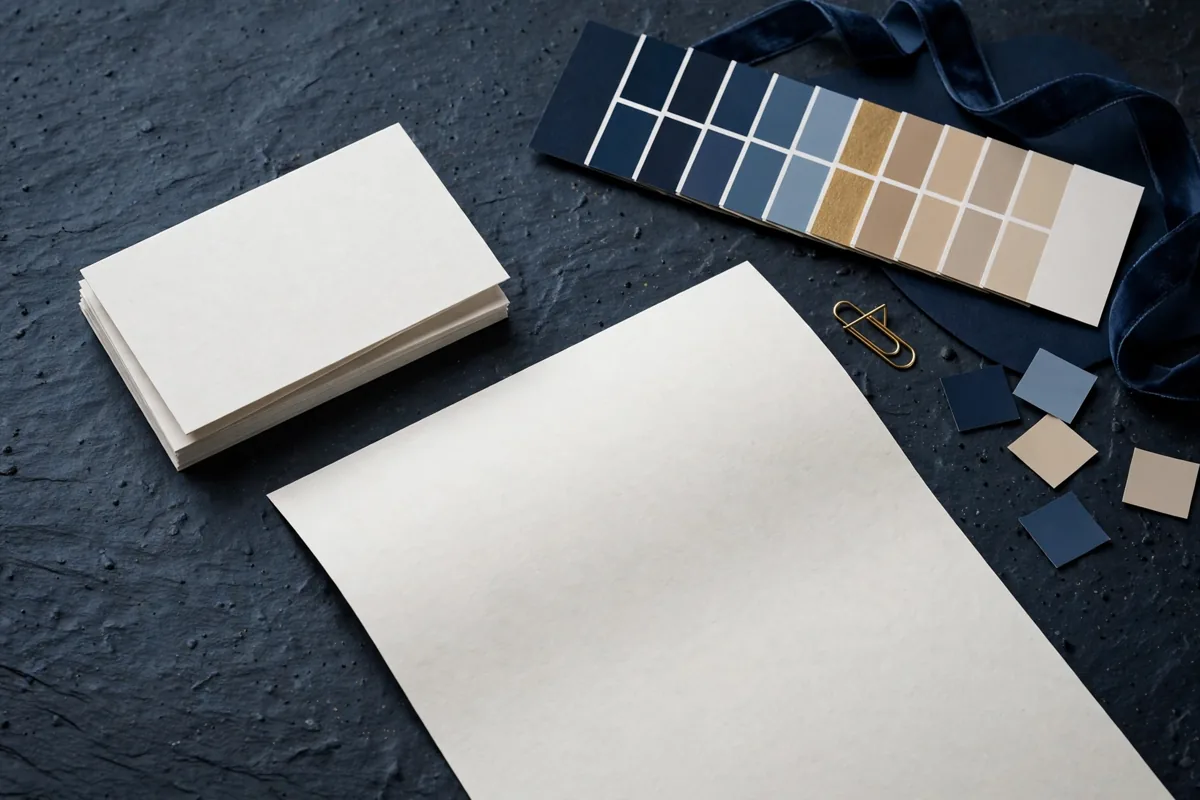
Pakistan Web provides brand identity design in Pakistan for new ventures that need to look established and growing businesses whose visuals no longer match their ambitions: logo systems (not one fragile logo file), colour and typography standards, imagery direction, and the guidelines that keep the identity intact when ten different hands produce materials.
Identity here is a working system, not a mood board. It is designed to survive contact with reality — a WhatsApp profile picture, a courier box, a Facebook ad at thumbnail size, an invoice — and to make every later marketing service we or anyone else provides faster and more consistent.
The Problems We Solve
Sound familiar?
Your logo works nowhere except the signboard
A logo that collapses at small sizes, cannot reverse on dark backgrounds and exists only as a flattened JPG is a daily operational problem disguised as a design asset. Every platform and print use becomes a compromise.
Every material looks like a different company
The Instagram post, the website, the packaging and the proposal each speak a different visual language. Customers meeting you in three places meet three strangers — and trust none of them fully.
You have outgrown your first identity
The identity made for a startup stall or a single shop now represents a multi-branch business courting corporate clients. When visuals undersell the operation, bigger customers hesitate for reasons they never articulate.
Nobody can say what the brand sounds like
Identity is also voice: the difference between how you and your cheapest competitor write a caption. Without defined messaging, every writer improvises and the brand’s personality resets weekly.
Our Methodology
How we deliver Brand Identity.
1. Discovery and positioning
We establish what the identity must say: your market, your buyers, your difference — in one clear positioning line the design has to express. Competitor visuals are audited so your identity enters the category recognisably distinct.
2. Concept directions
Two to three genuinely different design directions are developed and presented with reasoning — not twenty random logos. You choose with guidance on how each performs across your real applications.
3. System build
The chosen direction becomes a full system: primary and secondary logos, icon and wordmark versions, colour palette with usage rules, typography hierarchy, imagery and layout principles — each tested at real sizes on real materials.
4. Voice and messaging
Tagline development where needed, tone-of-voice definition with examples, and core message pillars your team can write from without drifting.
5. Guidelines and handover
A practical brand-guidelines document (not a 90-page ornament), all files in every format you will ever need, and templates for the materials you produce most — social posts, documents, signage.
Identity is a system, not a logo
The most common misunderstanding we correct: a logo is not a brand identity. A logo is one component — the signature. The identity is the complete system that makes a business recognisable and consistent everywhere: the colours and what they pair with, the typography and its hierarchy, the imagery style, the spacing and layout habits, the voice. When any one element is missing, every new material becomes an invention, and inventions drift. Drift is how a business ends up looking like five different companies across five platforms.
This is also why identity work pays for itself in operational speed. With a real system and templates, a social post takes minutes and always looks right; a proposal, a package and a shopfront sign are variations on one theme instead of three design projects. Clients consistently tell us the guidelines document — the plain-language rulebook — is the deliverable they use most, long after the launch excitement fades.
A final note on taste versus fit. Identity is not designed to win design awards or to match the owner’s favourite colour; it is designed to be recognised by your buyers, in your category, at the sizes and speeds your materials actually live at. Our presentations always show concepts in situ — on a phone screen, a signboard, a shopping bag — because an identity that only looks good in a presentation is a liability wearing nice clothes.
Naming sits adjacent to identity and deserves one honest paragraph. If your business name is generic, misspelled by every customer, or shared with three competitors, identity design will carry a permanent handicap no logo can fully fix. Where a rename is strategically right, we will raise it during discovery — with the costs stated plainly, including the recognition you would be trading away. Where the name works, we build around it. Either way, the decision is made consciously at the start, not discovered painfully after the signage is printed.
What is included
A brand identity engagement with Pakistan Web typically includes:
- Positioning and competitor visual audit
- Logo system: primary, secondary, icon and reversed versions
- Colour palette with digital and print specifications
- Typography system for web and documents
- Imagery and photography direction
- Voice and messaging guidelines with examples
- Social media and document templates
- Brand guidelines document (practical, usable)
- Complete file handover: vector, print and web formats
- Application mock-ups on your real materials
Pricing guidance
Brand identity is a project engagement quoted on scope — a logo system with guidelines for a single business is a different build from a multi-brand architecture with packaging and extensive templates. No figure in our published website schedule covers identity work specifically, so your proposal states the fixed project fee, deliverables and revision rounds in writing before design begins.
What we will not do is quote a suspiciously tiny logo-only price that excludes the system making it useful. Compare scopes, not just numbers — and see how identity fits the wider build costs on the pricing page if a website follows.
Getting Started
Your first 90 days with Pakistan Web.
Week 1 · Discovery and positioning
Positioning session and competitor visual audit; the creative brief is agreed — what the identity must say, to whom, and where it must perform.
Weeks 2–3 · Directions and selection
Two to three developed directions presented on your real applications — phone, signage, packaging — with reasoning. One direction is chosen and refined through structured feedback rounds.
Weeks 4–5 · System and handover
Full identity system built: logo suite, colours, typography, voice, templates and the guidelines document. All files handed over in every format, owned by you outright.
Use Cases
Who this is for.
New ventures that must look credible from day one
Startups and new divisions cannot borrow trust from history. A complete identity lets a young business present with the coherence customers associate with established players — honestly, through craft rather than claims.
Growing businesses rebranding upward
When your market moves up — bigger clients, new cities, corporate contracts — identity is rebuilt to match, carefully, so existing recognition is evolved rather than discarded.
Businesses preparing serious marketing investment
Ads, websites and content all perform better on a coherent identity. Many clients sequence identity first, then the website and campaigns inherit a system worth amplifying.
Is this the right service for you?
Identity work fits new ventures needing credibility, growing businesses whose visuals lag their ambitions, and any business about to invest seriously in a website or campaigns. If your current identity is coherent, recognised and working, keep it — we would rather improve your marketing than sell you a redesign of something that is not broken.
How success is measured and reported
Identity reporting is milestone-based and visual. You receive written checkpoints at positioning, direction selection and system completion, each with the decision required from you and its date, so the project’s state is never a matter of opinion. Direction presentations include performance evidence: legibility at real sizes, distinction against the competitor set audited in discovery, and application mock-ups on your actual materials — signage, packaging, social, documents. The final handover report inventories every deliverable and file format, the guidelines document, and the templates your team will use weekly, together with a short usage training session. After launch, identity quality is audited in the wild: we review how the system is actually being applied across your channels in the first quarter and correct drift early, while habits are still forming. Your identity is an asset meant to stay consistent for years; the reporting exists to make sure the investment survives contact with everyday use.
FAQs
Brand Identity questions, answered.
How long does a brand identity project take?
A complete identity system typically takes three to five weeks: discovery and directions in the first half, system build and guidelines in the second. Timelines assume one decision-maker giving consolidated feedback — committee-by-WhatsApp is where identity projects go to die.
How many logo concepts do we see?
Two to three fully developed directions, each presented with its reasoning and real-world applications. This is deliberate: twenty shallow options create choice paralysis; a few strong, distinct directions create a real decision.
Do we own the final identity and files?
Completely. All final files — vectors, print-ready and web formats — are handed over and owned by you on final payment. We keep no hostage copies and charge nothing for "releasing" your own brand.
Can you refresh our existing logo instead of starting over?
Often, yes, and it is frequently the smarter move when existing recognition has value. The audit phase assesses what equity your current identity holds; an evolution brief modernises the system while keeping the recognition your customers already have.
Will the identity include social media templates?
Yes — templates for your most-used formats are part of the standard handover, designed so your team or our social management team can produce on-brand content quickly without a designer in the loop for every post.
What do you need from us before identity work begins?
A discovery session about your business, market and ambitions; any existing materials; and one decision-maker. You do not need a design brief written in design language — translating business reality into identity is our job, not yours.
What if we only need a logo, not a full identity?
We will scope it honestly — but we will also show you what "only a logo" leaves unsolved: no usage rules, no templates, no system for the materials you produce weekly. Many clients start logo-first and extend into the system within the same project once they see their real applications mapped. The choice stays yours, made with open eyes.
Can you design packaging and signage too?
Yes — applications are part of the system build. Core packaging, signage and vehicle or premises graphics can be included in scope, designed from the same identity rules so everything a customer touches agrees with everything they have seen online.
Related services
Search Engine Optimization · Local SEO & Google Business Profile · Technical SEO · AI Search Optimization
Your Next Stage of Growth Starts with a Better Plan.
Tell us where your business is today, where you want it to go, and what is holding it back. We will reply with honest next steps — no pressure, no inflated promises.